CASE STUDY / 03
COMPANY
Scapin’
PRODUCT
Web3 social digital experience
ROLE
Product Designer
TEAM
Founders · Product · Engineering · Early beta users
RESPONSABILITIES
Product Discovery · Competitive Benchmarking · UX Strategy · Interaction Design · Prototyping · User Testing
01 / OVERVIEW
Creating identity from the ground up
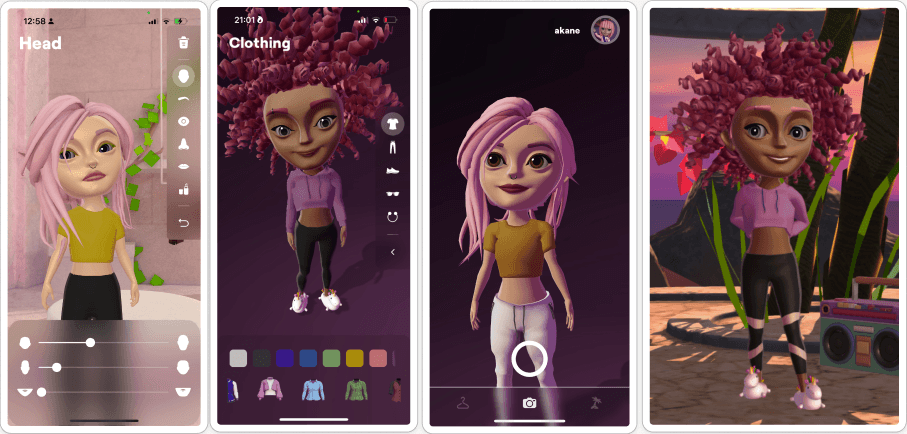
Scapin’ was an early-stage Web3 startup where digital identity and self-expression were central to the product experience. The Avatar Configurator was one of the first core features developed for the MVP before the initial beta. There were no established user behaviours, large-scale analytics or proven patterns to rely on.
The challenge was to define what a meaningful digital identity experience should be before knowing exactly how users would engage with it.
02 / THE CHALLENGE
Designing without all the answers
Designing within an MVP meant making decisions with incomplete information. Rather than optimising an existing experience, we needed to identify which assumptions were worth testing first.
The challenge wasn't simply designing an interface. It was identifying what experience was worth building.
03 / MVP STRATEGY
Build enough to learn
Rather than building a complete avatar ecosystem, we focused the MVP on the smallest experience capable of testing the core hypothesis:
Would creating a personal digital identity strengthen users' connection with the platform?
BUILD NOW
Core identity creation
TEST
Customisation, usability & emotional connection
LEARN
What deserves further investment
04 / DISCOVERY & RESEARCH
I owned both UX research and product design for the experience, using research as a continuous input into product decisions. I moderated live user sessions and analysed recorded sessions to understand how people approached digital identity and avatar customisation: what made an avatar feel personal, which choices carried meaning, and where customisation started to become overwhelming.
Alongside user research, I benchmarked avatar systems across games, social platforms and digital identity products to identify established patterns, opportunities and potential friction. Bringing these signals together allowed me to turn early assumptions into evidence and use that evidence to shape the experience, prioritise the MVP scope and guide design decisions as the product evolved.

UPLOAD: BENCHMARKING BOARDS / COMPETITOR ANALYSIS / REFERENCES
Moderated session
KEY INSIGHT
Meaningful customisation mattered more than maximum choice.
05 / SYNTHESIS
What we learned
01
MEANINGFUL CHOICE
More options did not automatically create a stronger sense of identity.
02
FAMILIAR PATTERNS
Recognisable customisation patterns made the experience easier to understand.
03
EVIDENCE BEFORE SCALE
Bring real user responses into decisions before expanding the system.

FROM OBSERVATIONS TO PRODUCT DECISIONS
06 / FROM INSIGHT TO PRODUCT

USER NEED
Feel represented
→
DESIGN DECISION
Meaningful appearance customisation

USER NEED
Avoid overwhelming choices
→
DESIGN DECISION
Progressive, structured categories

USER NEED
Understand the experience quickly
→
DESIGN DECISION
Familiar avatar-creation patterns
07 / IMPACT
MVP VALIDATED
The experience became one of the most positively received beta experiences, validating that digital identity could become a meaningful driver of emotional connection.
EVIDENCE TO INVEST
Research gave the team clearer direction on which parts of the identity experience were worth developing further.
06 / REFLECTION
Designing with uncertainty
Early-stage design changed how I think about confidence. The goal isn’t to eliminate uncertainty before making a decision; it is to understand which uncertainty matters most.
On Avatar Configurator, research gave the team a way to move forward without pretending we knew more than we did. We could make smaller bets, test the assumptions behind them and invest with greater confidence as evidence emerged.
